Sezione del sito per adultiStai entrando in una sezione del sito che contiene materiale vietato ai minori. Entrando, dichiari di avere almeno 18 anni o la maggiore età nella giurisdizione da cui stai accedendo al sito e acconsenti alla visualizzazione di contenuti sessualmente espliciti
Sorry!You need to be at least 18 to visit our website.
⚠ Chiusura estiva: spedizioni sospese dal 13 al 24 agosto. Gli ordini partiranno dal 25 agosto. Info: icharta@gmail.com
⚠ Summer break: shipping suspended from August 13th to 24th. Orders will ship from August 25th. Info: icharta@gmail.com
close
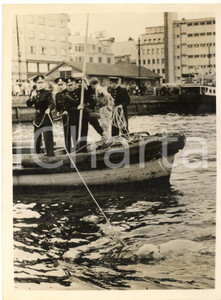
1940 BERGEN WW2 - Occupation of Norway by Nazi *Photo
FOTOGRAFIEFotografie storiche (1860-1970)Militari
SKU:
C-078614
€34,00
(Risparmi)
19th april 1940 Bergen - Norway (Norvegia)
Photo shows the town of Bergen occupied by Nazi Germany at the beginning of the war.
Fotografia d'epoca corredata di nota dattiloscritta al verso, con localizzazione errata della città (Halden invece di bergen: "Ecco qui una fotografia di Halden, la cittadina che è stata occupata l'altro giorno dalle truppe motorizzate avanzanti nel territorio".
Foto Giacomelli - Venezia
Vera fotografia d'epoca, originale, autentica.
In buone condizioni
-----------------------
Note: the occupation of Norway by Nazi Germany started with the German invasion of Norway on April 9, 1940 and ended on May 8, 1945, after the capitulation of German forces in Europe. Throughout this period, Norway was continuously occupied by the Wehrmacht. Civil rule was effectively assumed by the Reichskommissariat Norwegen ("Reich Commissariat of Norway"), which acted in collaboration with a pro-German puppet government, while the legitimate Norwegian king and government continued to operate in exile from London. This period of military occupation - usually referred to as the "war years" or "occupation period" in Norway - had defining significance for Norwegian society, and it is only recently that Norway considers itself as having passed out of the "post-war era".